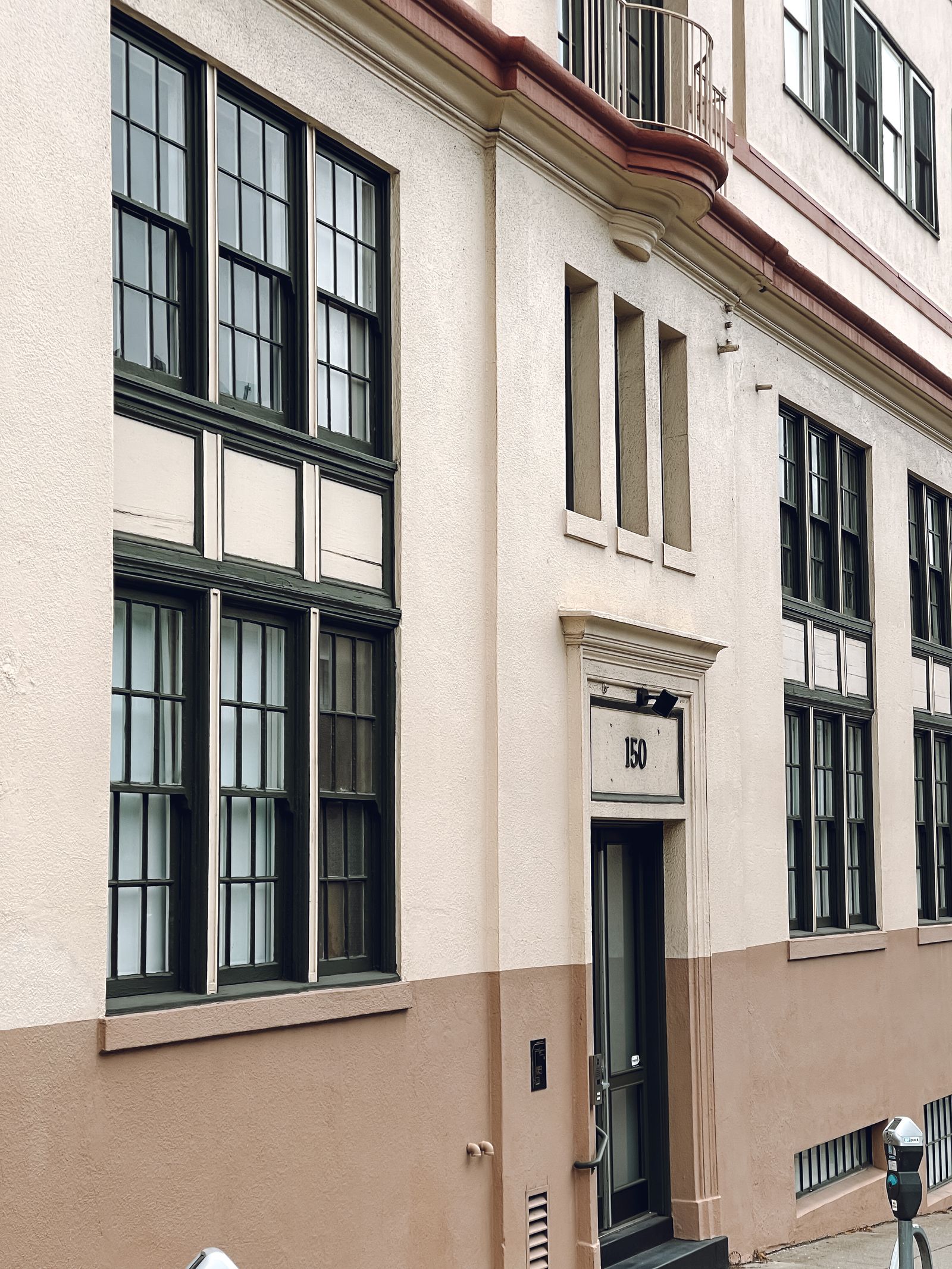
Start With the Facade, the Soil, and the Desired Finish
The first decision is not pressure level or equipment selection. It is determining what is on the surface and what outcome the property team expects. Green or dark organic growth, traffic film, loose atmospheric soil, bird residue, irrigation marks, efflorescence, oxidation, mineral deposits, rust, failed coatings, and construction residue are not interchangeable. A soft-wash process may improve some biological and general environmental staining, while mineral scale, metallic runoff, coating failure, or embedded pollution can require a different treatment. Describing every discoloration as dirt creates an unreliable scope and can expose a fragile surface to an unnecessary process.
A site assessment should record substrate type, apparent coating condition, sealants, joints, penetrations, windows, signage, lighting, vents, louvers, roof edges, and areas already showing distress. Historic or older masonry deserves particular restraint because hard mortar, soft brick, repairs, and previous coatings can react differently even on the same elevation. Newer commercial assemblies can also have sensitive finishes or warranty requirements. Representative test spots help the parties compare improvement, rinse behavior, and finish changes before a broad application. The test should be evaluated after the surface dries, since wet walls can temporarily hide unevenness.
The desired finish belongs in the written scope. A maintenance wash intended to reduce organic staining is different from restoration intended to correct oxidation, paint failure, etching, or deep masonry discoloration. Expectations for glass should also be explicit. Rinsing upper glazing can remove loose soil, but it does not promise squeegee-level detailing or correction of hard-water deposits. Separating maintenance cleaning from restoration makes the proposal more accurate and helps a property manager budget for specialty work where it is actually needed.
- Document facade materials and visible condition before selecting chemistry.
- Identify stains by likely category instead of assuming one treatment fits all.
- Use representative test areas when compatibility or finish change is uncertain.
- Define whether the objective is maintenance cleaning, detailed glass cleaning, or restoration.
Match the Method to Columbus Building Types
Columbus commercial properties range from compact urban storefronts to freestanding offices, hotels, institutional buildings, warehouses, and large retail destinations. In Downtown, limited staging space, loading activity, attached sidewalks, and multiple tenant entrances can shape the work zone as much as building height does. Short North properties along High Street often place storefront activity and pedestrian movement close to the facade. A workable scope may divide an elevation into smaller sections, preserve a dry entrance, and coordinate around deliveries or outdoor customer areas rather than attempting one uninterrupted pass.
The University District adds academic calendars, student movement, transit stops, apartment entrances, and late or irregular occupancy to the planning discussion. Franklinton can present a mix of older commercial fabric, creative spaces, industrial uses, new development, and active service areas. In Clintonville, low-rise buildings along North High Street may be physically easier to reach but still require careful treatment of storefront glass, signs, mature landscaping, neighboring businesses, and shared sidewalks. Easton-area retail, hospitality, and office properties can involve larger footprints, guest circulation, loading zones, parking movement, and brand-sensitive finishes. These examples do not determine the method by themselves; they identify questions that should be answered during the site review.
Use Soft-Wash Chemistry With Deliberate Controls
Soft washing is a controlled process, not simply the use of low pressure. Product choice, dilution, application volume, dwell time, surface temperature, wind, rinse method, and the surrounding environment all affect the result. Labels, safety data, substrate guidance, and equipment instructions should inform the work plan. A solution that is suitable for one material or stain may be unnecessary or incompatible elsewhere. Applying more product or allowing a longer dwell is not a responsible substitute for understanding why a stain remains.
Before broad application, the crew should identify landscaping, decorative metals, anodized or coated components, electrical devices, open vents, sensitive signage, unsealed joints, and areas where solution could travel behind the facade. Protection may include pre-wetting compatible vegetation, isolating a work zone, controlling spray direction, reducing application volume, covering selected items where appropriate, and providing a deliberate final rinse. Covers and containment materials must be used thoughtfully so they do not create heat, trap liquid, obstruct ventilation, or direct flow toward a drain.
Weather is an operating control. Wind can move mist beyond the intended elevation, direct sun can change dwell behavior, cold temperatures can reduce cleaning performance or create icing concerns, and rainfall can overwhelm a carefully planned recovery area. The team should establish stop conditions rather than improvising after overspray or runoff becomes difficult to manage. On a multi-elevation property, those conditions may differ throughout the day as wind and sun exposure change. A conservative sequence begins in a manageable test zone and expands only when application and rinse behavior are understood.
- Follow product labels, safety information, and material-specific guidance.
- Control application volume, dwell time, spray direction, and rinse flow.
- Protect people, plants, finishes, openings, and electrical components as the site requires.
- Define weather and wind conditions that pause or change the work.
Plan Access Without Treating a Drone as a Universal Tool
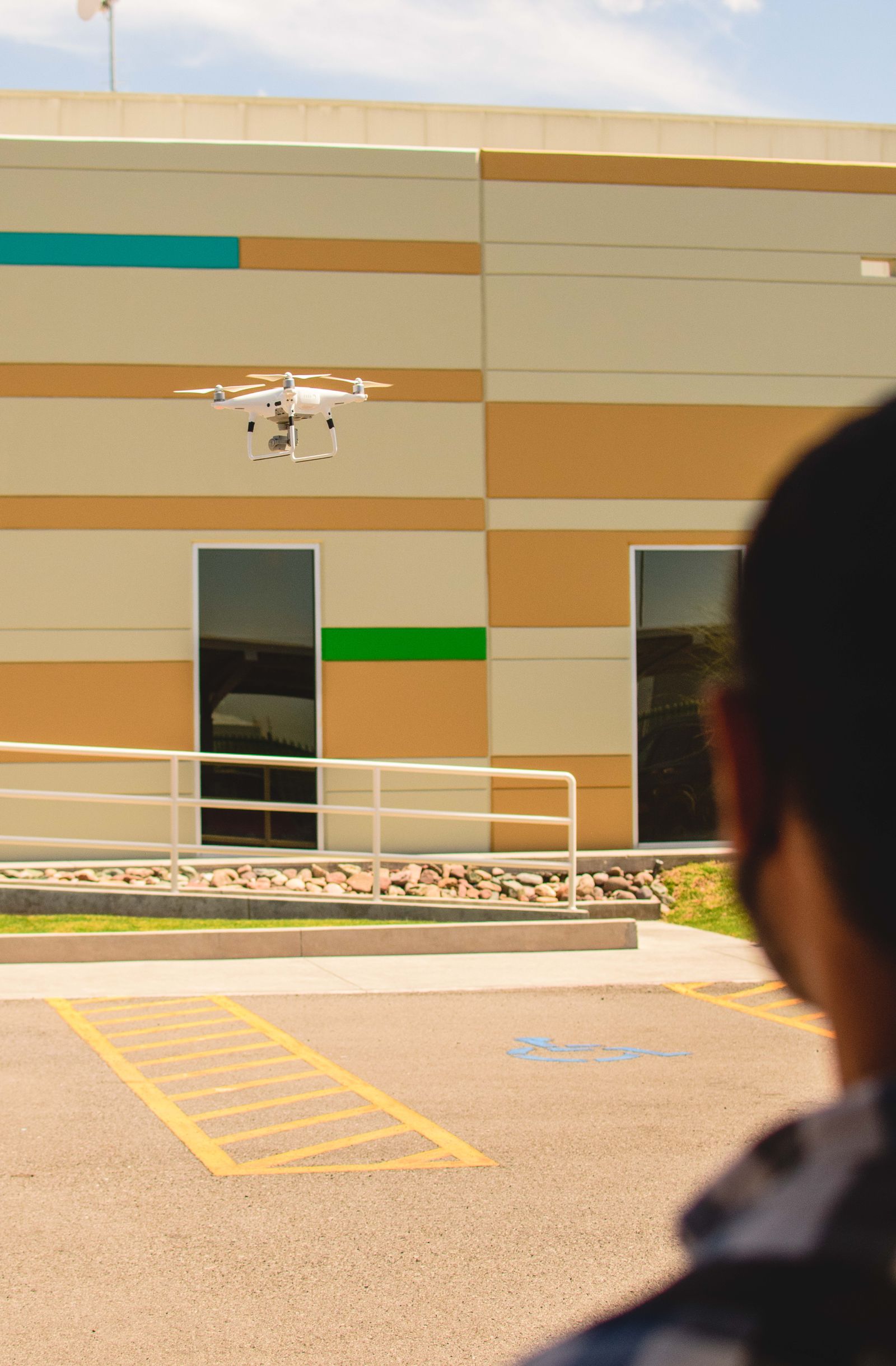
Drone-assisted washing can be useful on compatible upper elevations where the aircraft has adequate stand-off distance, a clear operating area, manageable hose routing, and an appropriate application task. It can reduce the need to position a lift for every wetting or rinse pass on some buildings. That potential is site-dependent. Trees, utility lines, signs, recessed walls, narrow alleys, overhead structures, antennas, wind channels, nearby traffic, and pedestrian density can make a facade unsuitable for drone delivery or limit the zones that can be reached effectively.
A drone cannot feel a surface, agitate a deposit, scrape adhesive, polish glass, repair a joint, verify hidden leakage, or perform a close tactile examination. It should not be represented as a replacement for contact restoration, professional inspections, or every access method. If a stain requires brushing, a window requires hand detailing, or a suspected envelope defect needs evaluation, the plan should identify lift access, water-fed pole work, rope access by a properly qualified provider, or referral to an appropriate specialist. Drone imagery can support documentation, but photographs are not the same as an engineering, architectural, roof, or building-envelope inspection.
Commercial drone work also requires an aviation plan separate from the wash method. Airspace, aircraft condition, operating limitations, visual line of sight, Remote ID applicability, weather, people and vehicles below, launch and recovery areas, and emergency procedures all need review under the rules applicable to the operation. The property itself does not grant authority to ignore aviation restrictions. A credible proposal explains both the cleaning limits and the flight limits, then provides a non-drone alternative for any excluded area.
Coordinate the Work Around an Occupied Property
Most Columbus commercial buildings remain active while exterior maintenance is performed. A useful work plan maps entrances, accessible routes, loading areas, employee access, tenant operations, outdoor seating, parking circulation, and public sidewalks before equipment arrives. The work zone should keep people away from spray, hoses, wet pavement, equipment, and overhead activity. Cones alone may not be enough where an entrance is busy or a hose crosses a circulation route. Spotters, temporary routing, staged closures, tenant communication, and smaller cleaning zones may be appropriate.
Scheduling should reflect actual use. Downtown deliveries and office arrivals, Short North restaurant and retail periods, University District class and event traffic, Franklinton production or gallery activity, Clintonville neighborhood business hours, and Easton guest or shopper circulation can all affect the least disruptive sequence. These are planning prompts, not assumptions that every property follows the same schedule. The property contact should identify known peak periods, special events, security requirements, and areas that cannot be interrupted.
- Map entrances, accessible paths, loading zones, sidewalks, and parking movement.
- Agree on tenant notices, work windows, security access, and interruption limits.
- Identify water access and hose routing before mobilization.
- Maintain a dry or protected route where the property requires continuous access.
Build Wash-Water Planning and Documentation Into the Scope
Exterior cleaning can move soil, treatment solution, and rinse water across a property, so drainage cannot be an afterthought. Before work, the team should observe surface slopes, roof drainage, area drains, curb inlets, landscaped areas, and the apparent path water would take from each elevation. Drain ownership and destination are not always obvious from appearance. Property drawings, facility staff, and the relevant public authority may be needed to distinguish storm, sanitary, combined, private treatment, or other infrastructure and to determine what disposal approach may be acceptable.
The City of Columbus 2022 Stormwater Drainage Manual is a useful planning reference, including its discussion of wash waters, containment, disposal options, and illicit discharges. It is not a site-specific permit or a substitute for current direction from the City, Ohio EPA, a utility, or a qualified environmental professional. A project plan may need to prevent discharge, isolate inlets, collect liquid, filter solids, use a sump, arrange hauling, or pursue an approved sanitary disposal route depending on the soil, chemistry, property, and applicable requirements. The exact controls should be confirmed for the job rather than promised through a generic phrase such as environmentally friendly.
Documentation closes the loop. Before-and-after photographs, test-area notes, areas not cleaned, observed defects, access exclusions, unusual runoff paths, and follow-up recommendations give the property team a useful maintenance record. The report should not recast ordinary photographs as a formal inspection. It should plainly separate observed conditions from diagnoses and list any area that needs contact restoration or specialist review. A clear record supports future budgeting and makes a recurring maintenance plan more responsive to actual facade conditions.